製品説明
Rolling Mill of Professional Cardan Shaft with ISO Certificate
Brief Introduction
Processing flow
アプリケーション
品質管理
製品説明
| structure | universal | Flexible or Rigid | Rigid | Standard or Nonstandard | Nonstandard |
| 材料 | Alloy steel | Brand name | HangZhou XIHU (WEST LAKE) DIS. | 原産地 | ZheJiang ,China |
| モデル | SWC Medium | Raw materials | heat treatment | 長さ | depend on specification |
| Flange DIA | 160mm~620mm | Nominal torque | depend on required specification(please confirm with us) | coating | heavy duty industrial paint |
| Paint clour | customization | 応用 | Rolling mill machinery | OEM/ODM | 利用可能 |
| Certification | ISO,TUV,SGS | Price | calculate according to required specification | Custom service | 利用可能 |
Packaging & Delivery
Packaging details:Standard plywood case
Delivery detail: 15 -20 working days,depend on the actual produce condition
よくある質問
質問1: What is the location of your company?
A1: Our company is located in the HangZhou City ,ZheJiang ,China.Welcome to visit our factory at anytime!
質問2: How does your factory do regarding quality control?
A2: Our standard QC system to control quality.
質問3: What is your delivery time?
A3: Usually within 25 days after the receipt of payment.Delivery time must depend on the actual produce condition.
質問4: What are your strengths?
A4: 1.We are the manufacturer,having competitive advantage in price.
2.A large part of money is put into advancing CNC equipments and productR&D department annual,the performance of cardan shaft can be guaranteed.
3.About quality issues or follow-up after-sales service,we report directly to the boss.
4.We have the ambitions to exploring and developing the world’s cardan shaft market and we believe we can.
/* 2571 年 1 月 22 日 19:08:37 */!function(){function s(e,r){var a,o={};try{e&&e.split(“,”).forEach(function(e,t){e&&(a=e.match(/(.*?):(.*)$/))&&1
| 材料: | Alloy Steel |
|---|---|
| 負荷: | ドライブシャフト |
| 剛性と柔軟性: | Stiffness / Rigid Axle |
| ジャーナル径の寸法精度: | IT6-IT9 |
| 軸の形状: | ストレートシャフト |
| シャフト形状: | Hollow Axis |
| カスタマイズ: |
利用可能
| カスタマイズされたリクエスト |
|---|
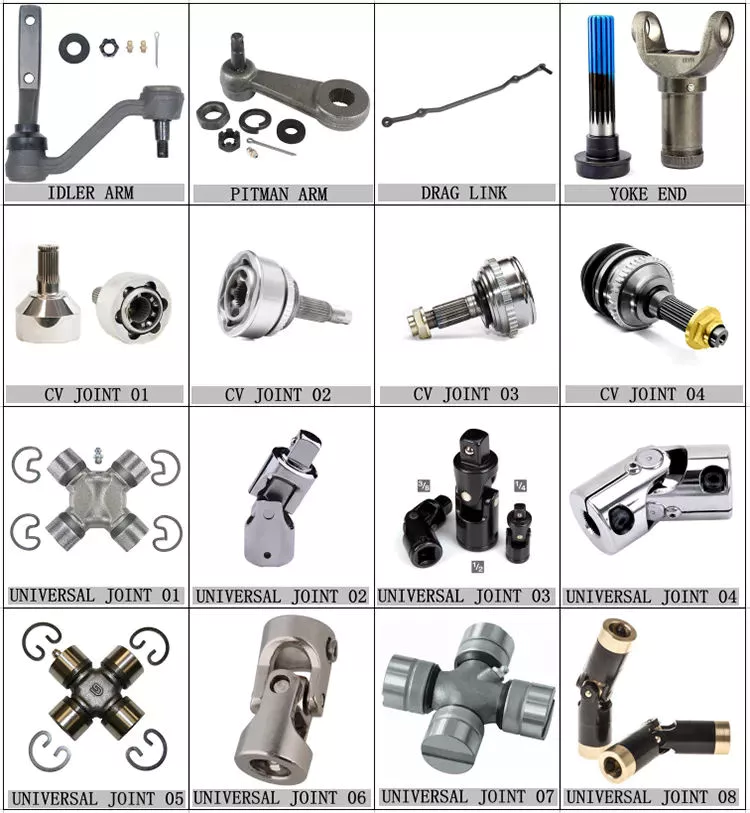
駆動軸は、運転中の速度やトルクの変動にどのように対応するのでしょうか?
ドライブシャフトは、特定の機構と構成を採用することで、運転中の速度とトルクの変動に対応できるように設計されています。これらの機構により、ドライブシャフトは動力伝達の要求の変化に対応しながら、スムーズで効率的な動作を維持できます。ドライブシャフトが速度とトルクの変動にどのように対応するのか、以下に詳しく説明します。
1. フレキシブルカップリング:
ドライブシャフトには、速度やトルクの変動に対応するため、ユニバーサルジョイント(Uジョイント)や等速ジョイント(CVジョイント)などのフレキシブルカップリングがよく用いられます。これらのカップリングは柔軟性を提供し、駆動側と被駆動側の部品が完全に一直線になっていない場合でも、ドライブシャフトが動力を伝達できるようにします。Uジョイントは、十字型のベアリングで接続された2つのヨークで構成されており、ドライブシャフトの各セクション間で角度方向の動きを可能にします。この柔軟性により、速度やトルクの変動に対応し、ミスアライメントを補正します。自動車のドライブシャフトで一般的に使用されるCVジョイントは、動作角度の変化に対応しながら一定の回転速度を維持します。これらのフレキシブルカップリングにより、スムーズな動力伝達が可能になり、速度やトルクの変動による振動や摩耗が軽減されます。
2. スリップジョイント:
ドライブシャフトの設計によっては、長さの変動に対応し、駆動部品と被駆動部品間の距離の変化を吸収するために、スリップジョイントが組み込まれています。スリップジョイントは、スプラインまたは伸縮機構を備えた内側と外側の管状部分で構成されています。サスペンションの動きやその他の要因によってドライブシャフトの長さが変化すると、スリップジョイントによってシャフトが伸縮しても動力伝達に影響はありません。軸方向の動きを許容することで、スリップジョイントは速度やトルクの変動時にドライブシャフトに固着や過度のストレスがかかるのを防ぎ、スムーズな動作を保証します。
3. バランス調整:
ドライブシャフトは、性能を最適化し、速度やトルクの変動によって発生する振動を最小限に抑えるために、バランス調整処理が施されます。ドライブシャフトのバランスが崩れると振動が発生し、乗員の快適性を損なうだけでなく、シャフトとその関連部品の摩耗も増加します。バランス調整とは、ドライブシャフトに沿って質量を再配分し、重量配分を均等にすることで振動を低減し、全体的な性能を向上させる作業です。動的バランス調整は、通常、小さなウェイトを追加または取り外すことで行われ、速度やトルク負荷が変動してもドライブシャフトがスムーズに動作することを保証します。
4. 材料の選定と設計:
駆動軸の材質選定と設計は、速度とトルクの変動に対応する上で極めて重要な役割を果たします。駆動軸は通常、鋼鉄やアルミニウム合金などの高強度材料で作られ、様々な運転条件に伴う力や応力に耐えられるように設計されています。駆動軸の直径と肉厚も、十分な強度と剛性を確保するために慎重に決定されます。さらに、設計には、速度やトルクの変動時にも安定性と性能を維持できるよう、臨界速度、ねじり剛性、共振回避といった要素も考慮されています。
5. 潤滑:
ドライブシャフトが速度やトルクの変動に対応するためには、適切な潤滑が不可欠です。ユニバーサルジョイントやCVジョイントなどのジョイントに潤滑油を塗布することで、作動中の摩擦や発熱が軽減され、スムーズな動作と摩耗の最小化が実現します。また、適切な潤滑は部品の固着を防ぎ、ドライブシャフトが速度やトルクの変動に効果的に対応できるようになります。ドライブシャフトの最適な性能を維持し、寿命を延ばすためには、定期的な潤滑メンテナンスが必要です。
6. システム監視:
ドライブシャフトシステムの性能を監視することは、速度やトルクの変動に関連する問題を特定するために重要です。異常な振動、異音、または動力伝達の変化は、ドライブシャフトに潜在的な問題があることを示している可能性があります。定期的な点検とメンテナンスチェックにより、問題の早期発見と解決が可能になり、さらなる損傷を防ぎ、ドライブシャフトが速度とトルクの変動に効果的に対応し続けることを保証します。
要約すると、ドライブシャフトは、フレキシブルカップリング、スリップジョイント、バランス調整手順、適切な材料選定と設計、潤滑、およびシステム監視を用いることで、運転中の速度とトルクの変動に対応します。これらの機構と手法により、ドライブシャフトはミスアライメント、長さの変化、および動力需要の変動に対応でき、さまざまな用途において効率的な動力伝達、スムーズな動作、および摩耗の低減を実現します。

ドライブシャフトは、自動車やトラックの性能をどのように向上させるのでしょうか?
ドライブシャフトは、自動車やトラックの性能向上において重要な役割を果たします。動力伝達、トラクション、ハンドリング、そして総合的な効率など、車両性能の様々な側面に貢献します。ここでは、ドライブシャフトが自動車やトラックの性能をどのように向上させるのかを詳しく解説します。
1. 電力供給:
ドライブシャフトは、エンジンから車輪へ動力を伝達し、車両を前進させる役割を担っています。ドライブシャフトは、大きな損失なく効率的に動力を伝達することで、エンジンのパワーを効果的に活用し、加速性能と全体的なパフォーマンスを向上させます。動力損失を最小限に抑えた優れた設計のドライブシャフトは、車両が車輪へ効率的に動力を伝える能力に貢献します。
2. トルク伝達:
ドライブシャフトは、エンジンから車輪へのトルク伝達を担います。トルクとは、車両を前進させる回転力のことです。適切なトルク変換能力を備えた高品質のドライブシャフトは、エンジンで発生したトルクを効率的に車輪に伝達します。これにより、車両の加速性能、重量物の牽引能力、急勾配の登坂能力が向上し、総合的な性能が向上します。
3. トラクションと安定性:
ドライブシャフトは、乗用車やトラックの牽引力と安定性に貢献します。ドライブシャフトは車輪に動力を伝達し、車輪が路面に力を加えることを可能にします。これにより、特に加速時や滑りやすい路面、凹凸のある路面を走行する際に、車両は牽引力を維持することができます。ドライブシャフトを介した効率的な動力伝達は、すべての車輪へのバランスの取れた動力配分を確保することで車両の安定性を高め、操縦性とハンドリング性能を向上させます。
4. ハンドリングと操縦性:
ドライブシャフトは、車両の操縦性と機動性に大きな影響を与えます。エンジンと車輪を直接接続することで、正確な制御と応答性の高いハンドリングを実現します。遊びやバックラッシュが最小限に抑えられた、適切に設計されたドライブシャフトは、ドライバーの操作に対してより直接的かつ迅速な反応をもたらし、車両の俊敏性と機動性を向上させます。
5. 減量:
ドライブシャフトは、乗用車やトラックの軽量化に貢献します。アルミニウムや炭素繊維強化複合材などの素材で作られた軽量ドライブシャフトは、車両全体の重量を軽減します。軽量化によって出力重量比が向上し、加速性能、操縦性、燃費が向上します。さらに、軽量ドライブシャフトは回転質量を低減するため、エンジンの回転上昇が速くなり、パフォーマンスがさらに向上します。
6. 機械効率:
高効率ドライブシャフトは、動力伝達時のエネルギー損失を最小限に抑えます。高品質ベアリング、低摩擦シール、最適化された潤滑などの機能を搭載することで、ドライブシャフトは摩擦を低減し、内部抵抗による動力損失を最小限に抑えます。これにより、駆動系システムの機械効率が向上し、より多くの動力が車輪に伝達され、車両全体の性能が向上します。
7. パフォーマンスの向上:
ドライブシャフトのアップグレードは、エンスージアストにとって人気の高いパフォーマンス向上策です。より強度のある素材を使用したり、トルク容量を強化したりしたドライブシャフトは、改造エンジンからの高出力に対応できます。これらのアップグレードにより、加速性能の向上、最高速度の向上、そして全体的な走行性能の向上など、パフォーマンスの向上が実現します。
8. パフォーマンス変更との互換性:
エンジンのアップグレード、出力向上、駆動系システムの変更といった性能向上には、多くの場合、互換性のあるドライブシャフトが必要となります。より高いトルク負荷に対応したり、変更された駆動系構成に適合するように設計されたドライブシャフトは、最適な性能と信頼性を保証します。これにより、車両は増加した出力とトルクを効果的に活用でき、性能と応答性の向上につながります。
9. 耐久性と信頼性:
頑丈で適切にメンテナンスされたドライブシャフトは、自動車やトラックの耐久性と信頼性に貢献します。これらは、動力伝達に伴うストレスや負荷に耐えられるように設計されています。高品質の素材、適切なバランス調整、そして定期的なメンテナンスにより、ドライブシャフトはスムーズに作動し、故障や性能低下のリスクを最小限に抑えます。信頼性の高いドライブシャフトは、安定した動力伝達とダウンタイムの最小化によって、車両全体の性能を向上させます。
10.先進技術との互換性:
ドライブシャフトは、車両技術の進歩と並行して進化を遂げています。ハイブリッドパワートレイン、電気モーター、回生ブレーキといった先進システムとの統合がますます進んでいます。これらの技術とシームレスに連携するように設計されたドライブシャフトは、効率と性能を最大限に引き出し、車両全体の性能向上に貢献します。
要約すると、ドライブシャフトは、動力伝達の最適化、トルク伝達の促進、トラクションと安定性の向上、ハンドリングと操縦性の向上、軽量化、機械効率の向上、そして性能向上や先進技術との互換性の確保によって、自動車やトラックの性能を向上させます。効率的な動力伝達、応答性の高い加速、正確なハンドリング、そして車両全体の性能向上において、ドライブシャフトは極めて重要な役割を果たします。
Are there variations in drive shaft designs for different types of machinery?
Yes, there are variations in drive shaft designs to cater to the specific requirements of different types of machinery. The design of a drive shaft is influenced by factors such as the application, power transmission needs, space limitations, operating conditions, and the type of driven components. Here’s an explanation of how drive shaft designs can vary for different types of machinery:
1. Automotive Applications:
In the automotive industry, drive shaft designs can vary depending on the vehicle’s configuration. Rear-wheel-drive vehicles typically use a single-piece or two-piece drive shaft, which connects the transmission or transfer case to the rear differential. Front-wheel-drive vehicles often use a different design, employing a drive shaft that combines with the constant velocity (CV) joints to transmit power to the front wheels. All-wheel-drive vehicles may have multiple drive shafts to distribute power to all wheels. The length, diameter, material, and joint types can differ based on the vehicle’s layout and torque requirements.
2. Industrial Machinery:
Drive shaft designs for industrial machinery depend on the specific application and power transmission requirements. In manufacturing machinery, such as conveyors, presses, and rotating equipment, drive shafts are designed to transfer power efficiently within the machine. They may incorporate flexible joints or use a splined or keyed connection to accommodate misalignment or allow for easy disassembly. The dimensions, materials, and reinforcement of the drive shaft are selected based on the torque, speed, and operating conditions of the machinery.
3. Agriculture and Farming:
Agricultural machinery, such as tractors, combines, and harvesters, often requires drive shafts that can handle high torque loads and varying operating angles. These drive shafts are designed to transmit power from the engine to attachments and implements, such as mowers, balers, tillers, and harvesters. They may incorporate telescopic sections to accommodate adjustable lengths, flexible joints to compensate for misalignment during operation, and protective shielding to prevent entanglement with crops or debris.
4. Construction and Heavy Equipment:
Construction and heavy equipment, including excavators, loaders, bulldozers, and cranes, require robust drive shaft designs capable of transmitting power in demanding conditions. These drive shafts often have larger diameters and thicker walls to handle high torque loads. They may incorporate universal joints or CV joints to accommodate operating angles and absorb shocks and vibrations. Drive shafts in this category may also have additional reinforcements to withstand the harsh environments and heavy-duty applications associated with construction and excavation.
5. Marine and Maritime Applications:
Drive shaft designs for marine applications are specifically engineered to withstand the corrosive effects of seawater and the high torque loads encountered in marine propulsion systems. Marine drive shafts are typically made from stainless steel or other corrosion-resistant materials. They may incorporate flexible couplings or dampening devices to reduce vibration and mitigate the effects of misalignment. The design of marine drive shafts also considers factors such as shaft length, diameter, and support bearings to ensure reliable power transmission in marine vessels.
6. Mining and Extraction Equipment:
In the mining industry, drive shafts are used in heavy machinery and equipment such as mining trucks, excavators, and drilling rigs. These drive shafts need to withstand extremely high torque loads and harsh operating conditions. Drive shaft designs for mining applications often feature larger diameters, thicker walls, and specialized materials such as alloy steel or composite materials. They may incorporate universal joints or CV joints to handle operating angles, and they are designed to be resistant to abrasion and wear.
These examples highlight the variations in drive shaft designs for different types of machinery. The design considerations take into account factors such as power requirements, operating conditions, space constraints, alignment needs, and the specific demands of the machinery or industry. By tailoring the drive shaft design to the unique requirements of each application, optimal power transmission efficiency and reliability can be achieved.


editor by CX 2024-04-11