
وصف المنتج
1
منتجات
Name: Agricultural Machinery and Tractors Spare Parts Forged Alloy Steel Drive Shaft Tractor PTO
Material: 40CrMo
Weight: From .2kg-5kg
Packing: wooden case
Min order: 1000pcs
Customized production is available as your drawings or sample.
| عملية | Die Forging | |
| مادة | Stainless Steel, Carbon Steel, Alloy Steel | |
| وزن | 0.1Kg~20Kg | |
| Heat Treatment | Quenching, Annealing,Tempering,Normalizing, Quenching and Tempering | |
| Testing instrument | composition testing | Spectrometer, Metallographic microscope |
| Performance testing | Hardness tester, Tensile testing machine | |
| Size Measuring | CMM,Micrometer, Vernier Caliper, Depth Caliper, feeler gauge | |
| Thread Gauge , Height Gauge | ||
| Roughness | Ra1.6~Ra6.3 | |
| Machining Equipment | CNC Center , CNC Machines, Turning, Drilling, Milling, boring machine,Grinding Machines, | |
| Wire EDM,Laser Cutting&Welding, Plasma Cutting &Welding, EDM etc. | ||
| Quality control | Sampling inspection of raw materials and semi-finished products, 100% Inspection of finished products | |
| معالجة السطح | Shot Blast , Powder Coating, Polishing, Galvanized , Chrome Plated | |
| Production Capacity | 60000T / Years | |
| مهلة | Normally 30 – 45 Days. | |
| شروط الدفع | T/T , L/C | |
| Material Standard | ASTM , AISI , DIN , BS, JIS, GB, | |
| Certification | ISO9001:2008, IATF16949:2016 | |
Certificates
2
Products Quality Control
Quality control involve the inspection and control of incoming materials, production processes, and finished products.
The quality control process includes,
1 First of all, the incoming raw materials with random sampling are analyzed by metallographic microscope to ensure that the chemical composition meets the production requirements
2 Then In the production process, there are QC staffs timely sampling ensure that the products are free of defects in the manufacturing process, and to coordinate and handle any abnormal quality issues may be occurred.
3 The final step of production process is magnetic particle flaw detector of the metal parts to detect it’s hidden crack or other defects.
4 All the finished metal parts is sampled in proportion and sent to the laboratory for various mechanical performance tests and size measurement, and the surface quality is manually 100% inspected.
The relevant testing equipment pictures are as following:
3
Quality Management System Control :
We strictly carry out system management accordance with iso9001 and ts16949 quality standards. And 5S lean production management is implemented on the production site.
The production management site as following:
4
Our Advantages:
ماركة
Our parent company, HiHangZhou Group, is a world-renowned high-end machinery manufacturing enterprise with 40 domestic subsidiaries and branches and 8 foreign manufacturing plants. Has long-term experience and good reputation in cooperation with world-renowned enterprises.
Technology
We have a complete production process and equipment research and development capabilities for ferrous metals forming. More than 25 years of production experience in forging equipment and casting equipment manufacturers, make us more thoroughly get all the performance of each equipment. One-third of our company’s employees are technician and R&D personnel, ensuring that high-quality products are produced with high efficiency.
خدمة
We can provide custom and standard manufacturing services with multiple manufacturing process integrations. The quality and delivery of products can be fully guaranteed, and the ability to communicate quickly and effectively.
Culture
The unique corporate culture can give full play to the potential of individuals and provide a strong vitality for the sustainable development of the company.
Social responsibility
Our company strictly implements low-carbon environmental protection, energy-saving and emission-reduction production, and is a benchmark enterprise in local region.
5
Company Culture
Our Vision
To become 1 of the leading companies
Our Mission
To become a platform for employees to realize their dream
To become 1 of the transforming and upgrading pacemaker of Chinese enterprises
To set the national brands with pride
Our Belief
Strive to build the company into an ideal platform for entrepreneurs to realize their self-worth and contribute to the society
Values
Improvement is innovation, everyone can innovate
innovation inspired and failures tolerated
6
التعليمات
1.
Q: Are you a trading company or a manufacturer?
A: Obviously we are a manufacturer of forging products, casting products and also have a high level of machining capabilities.
2.
Q: What series products do your have?
A: We are mainly engaged in forming processing of ferrous metals, including processing by casting , forging and machining. As you know, such machinery parts can be observed in various industries of equipment manufacturing.
3
Q: Do you provide samples? is it free?
A: Yes, we commonly provide samples according to the traditional practice, but we also need customers to provide a freight pay-by-account number to show mutual CZPT of cooperation.
4
Q: Is OEM available?
A: Yes, OEM is available.
5
Q: What’s your quality guarantee?
A: We insist that the survival of the company should depend on the products quality continuous improvement, without which we cannot survive for long. We carry out strictly product quality control for every process from incoming materials, production process to finished products via advanced detection instrument and equipment. We also invite independent third parties to certify our quality and management systems. Till now we have passed ISO/TS16949 and SGS certification .
6
Q. How about the Packing?
A: We usually use the iron box, or wooden case, also it can be customized according to customer’s demands.
7
Q: What is your minimum order quantity?
A: Yes, we require all international orders to have an minimum order quantity. The quantity is up to the exact products feature or property such as the material, weight, construction etc.
8
Q: What is the lead time?
A: Generally our forging products and casting products need to make new dies or molds, the time of making new dies or molds and samples within 30-45 days, and the large batch production time within 30-45 days. it’s also according to the parts structural complexity and quantity.
9
Q: What kinds of payment methods do you accept?
A: You can make the payment by T/T or L/C. 30% deposit in advance, 70% balance against the copy of B/L.
/* March 10, 2571 17:59:20 */!function(){function s(e,r){var a,o={};try{e&&e.split(“,”).forEach(function(e,t){e&&(a=e.match(/(.*?):(.*)$/))&&1
| Processing Object: | معدن |
|---|---|
| Molding Style: | Forging |
| Molding Technics: | Pressure Casting |
| Application: | Agricultural Machinery Parts |
| Material: | فُولاَذ |
| Heat Treatment: | Tempering |
| Samples: |
US$ 20/Piece
1 Piece(Min.Order) | |
|---|
| Customization: |
متاح
| Customized Request |
|---|
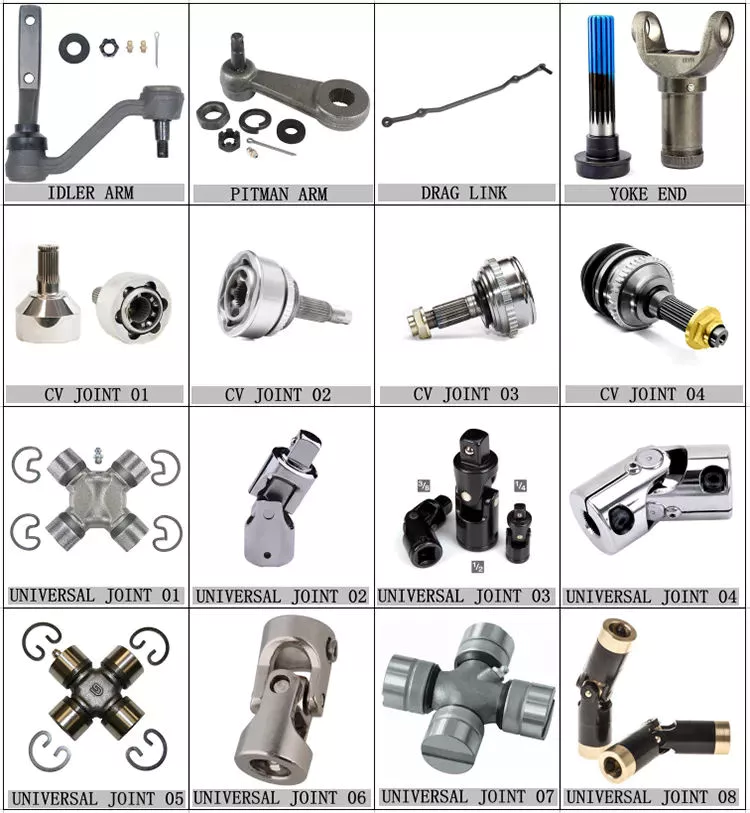
How do drive shafts handle variations in speed and torque during operation?
Drive shafts are designed to handle variations in speed and torque during operation by employing specific mechanisms and configurations. These mechanisms allow the drive shafts to accommodate the changing demands of power transmission while maintaining smooth and efficient operation. Here’s a detailed explanation of how drive shafts handle variations in speed and torque:
1. Flexible Couplings:
Drive shafts often incorporate flexible couplings, such as universal joints (U-joints) or constant velocity (CV) joints, to handle variations in speed and torque. These couplings provide flexibility and allow the drive shaft to transmit power even when the driving and driven components are not perfectly aligned. U-joints consist of two yokes connected by a cross-shaped bearing, allowing for angular movement between the drive shaft sections. This flexibility accommodates variations in speed and torque and compensates for misalignment. CV joints, which are commonly used in automotive drive shafts, maintain a constant velocity of rotation while accommodating changing operating angles. These flexible couplings enable smooth power transmission and reduce vibrations and wear caused by speed and torque variations.
2. Slip Joints:
In some drive shaft designs, slip joints are incorporated to handle variations in length and accommodate changes in distance between the driving and driven components. A slip joint consists of an inner and outer tubular section with splines or a telescoping mechanism. As the drive shaft experiences changes in length due to suspension movement or other factors, the slip joint allows the shaft to extend or compress without affecting the power transmission. By allowing axial movement, slip joints help prevent binding or excessive stress on the drive shaft during variations in speed and torque, ensuring smooth operation.
3. Balancing:
Drive shafts undergo balancing procedures to optimize their performance and minimize vibrations caused by speed and torque variations. Imbalances in the drive shaft can lead to vibrations, which not only affect the comfort of vehicle occupants but also increase wear and tear on the shaft and its associated components. Balancing involves redistributing mass along the drive shaft to achieve even weight distribution, reducing vibrations and improving overall performance. Dynamic balancing, which typically involves adding or removing small weights, ensures that the drive shaft operates smoothly even under varying speeds and torque loads.
4. Material Selection and Design:
The selection of materials and the design of drive shafts play a crucial role in handling variations in speed and torque. Drive shafts are typically made from high-strength materials, such as steel or aluminum alloys, chosen for their ability to withstand the forces and stresses associated with varying operating conditions. The diameter and wall thickness of the drive shaft are also carefully determined to ensure sufficient strength and stiffness. Additionally, the design incorporates considerations for factors such as critical speed, torsional rigidity, and resonance avoidance, which help maintain stability and performance during speed and torque variations.
5. Lubrication:
Proper lubrication is essential for drive shafts to handle variations in speed and torque. Lubricating the joints, such as U-joints or CV joints, reduces friction and heat generated during operation, ensuring smooth movement and minimizing wear. Adequate lubrication also helps prevent the binding of components, allowing the drive shaft to accommodate speed and torque variations more effectively. Regular lubrication maintenance is necessary to ensure optimal performance and extend the lifespan of the drive shaft.
6. System Monitoring:
Monitoring the performance of the drive shaft system is important to identify any issues related to variations in speed and torque. Unusual vibrations, noises, or changes in power transmission can indicate potential problems with the drive shaft. Regular inspections and maintenance checks allow for the early detection and resolution of issues, helping to prevent further damage and ensure the drive shaft continues to handle speed and torque variations effectively.
In summary, drive shafts handle variations in speed and torque during operation through the use of flexible couplings, slip joints, balancing procedures, appropriate material selection and design, lubrication, and system monitoring. These mechanisms and practices allow the drive shaft to accommodate misalignment, changes in length, and variations in power demands, ensuring efficient power transmission, smooth operation, and reduced wear and tear in various applications.
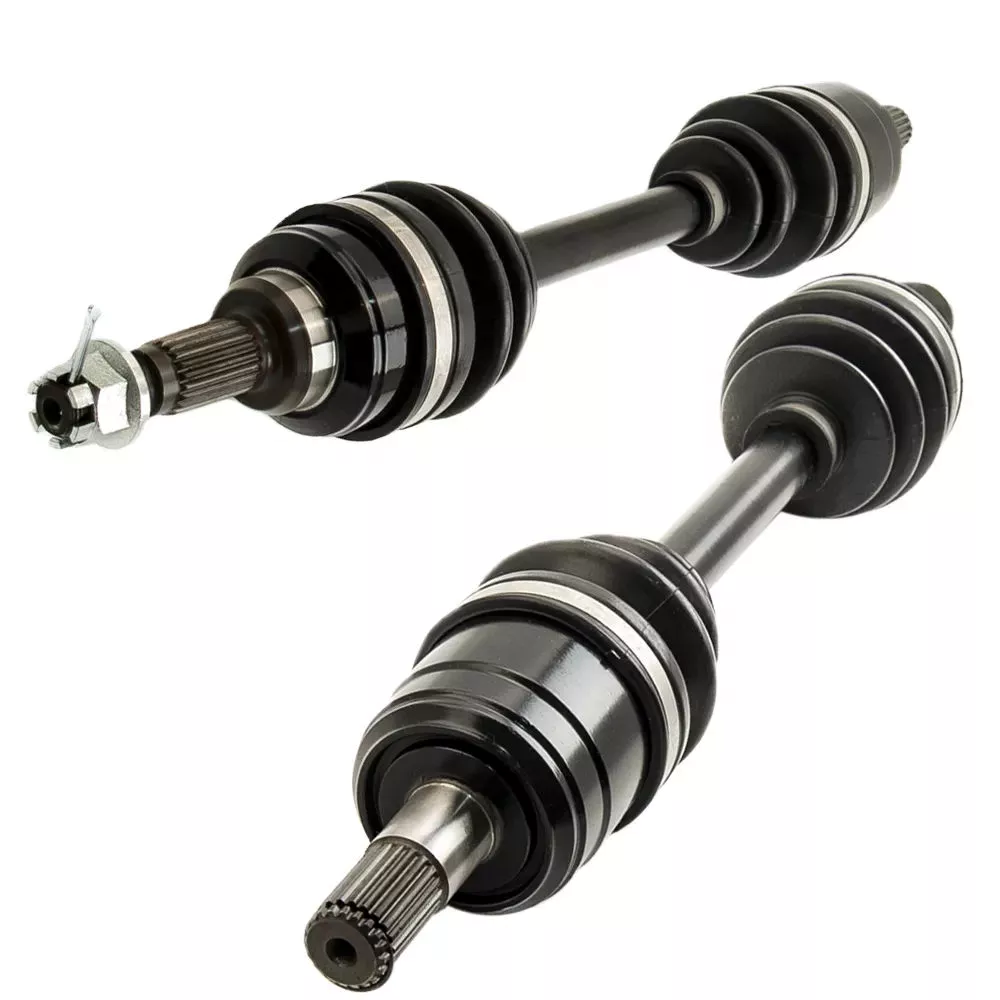
How do drive shafts handle variations in load and vibration during operation?
Drive shafts are designed to handle variations in load and vibration during operation by employing various mechanisms and features. These mechanisms help ensure smooth power transmission, minimize vibrations, and maintain the structural integrity of the drive shaft. Here’s a detailed explanation of how drive shafts handle load and vibration variations:
1. Material Selection and Design:
Drive shafts are typically made from materials with high strength and stiffness, such as steel alloys or composite materials. The material selection and design take into account the anticipated loads and operating conditions of the application. By using appropriate materials and optimizing the design, drive shafts can withstand the expected variations in load without experiencing excessive deflection or deformation.
2. Torque Capacity:
Drive shafts are designed with a specific torque capacity that corresponds to the expected loads. The torque capacity takes into account factors such as the power output of the driving source and the torque requirements of the driven components. By selecting a drive shaft with sufficient torque capacity, variations in load can be accommodated without exceeding the drive shaft’s limits and risking failure or damage.
3. Dynamic Balancing:
During the manufacturing process, drive shafts can undergo dynamic balancing. Imbalances in the drive shaft can result in vibrations during operation. Through the balancing process, weights are strategically added or removed to ensure that the drive shaft spins evenly and minimizes vibrations. Dynamic balancing helps to mitigate the effects of load variations and reduces the potential for excessive vibrations in the drive shaft.
4. Dampers and Vibration Control:
Drive shafts can incorporate dampers or vibration control mechanisms to further minimize vibrations. These devices are typically designed to absorb or dissipate vibrations that may arise from load variations or other factors. Dampers can be in the form of torsional dampers, rubber isolators, or other vibration-absorbing elements strategically placed along the drive shaft. By managing and attenuating vibrations, drive shafts ensure smooth operation and enhance overall system performance.
5. CV Joints:
Constant Velocity (CV) joints are often used in drive shafts to accommodate variations in operating angles and to maintain a constant speed. CV joints allow the drive shaft to transmit power even when the driving and driven components are at different angles. By accommodating variations in operating angles, CV joints help minimize the impact of load variations and reduce potential vibrations that may arise from changes in the driveline geometry.
6. Lubrication and Maintenance:
Proper lubrication and regular maintenance are essential for drive shafts to handle load and vibration variations effectively. Lubrication helps reduce friction between moving parts, minimizing wear and heat generation. Regular maintenance, including inspection and lubrication of joints, ensures that the drive shaft remains in optimal condition, reducing the risk of failure or performance degradation due to load variations.
7. Structural Rigidity:
Drive shafts are designed to have sufficient structural rigidity to resist bending and torsional forces. This rigidity helps maintain the integrity of the drive shaft when subjected to load variations. By minimizing deflection and maintaining structural integrity, the drive shaft can effectively transmit power and handle variations in load without compromising performance or introducing excessive vibrations.
8. Control Systems and Feedback:
In some applications, drive shafts may be equipped with control systems that actively monitor and adjust parameters such as torque, speed, and vibration. These control systems use sensors and feedback mechanisms to detect variations in load or vibrations and make real-time adjustments to optimize performance. By actively managing load variations and vibrations, drive shafts can adapt to changing operating conditions and maintain smooth operation.
In summary, drive shafts handle variations in load and vibration during operation through careful material selection and design, torque capacity considerations, dynamic balancing, integration of dampers and vibration control mechanisms, utilization of CV joints, proper lubrication and maintenance, structural rigidity, and, in some cases, control systems and feedback mechanisms. By incorporating these features and mechanisms, drive shafts ensure reliable and efficient power transmission while minimizing the impact of load variations and vibrations on overall system performance.

هل يمكنك شرح الأنواع المختلفة لأعمدة نقل الحركة وتطبيقاتها المحددة؟
تتوفر أعمدة نقل الحركة بأنواع مختلفة، كل منها مصمم ليناسب تطبيقات ومتطلبات محددة. يعتمد اختيار عمود نقل الحركة على عوامل مثل نوع المركبة أو المعدات، واحتياجات نقل الطاقة، ومحدودية المساحة، وظروف التشغيل. إليك شرح لأنواع أعمدة نقل الحركة المختلفة وتطبيقاتها المحددة:
1. عمود صلب:
العمود الصلب، المعروف أيضًا باسم عمود الدوران الموحد أو عمود الدوران المصنوع من الفولاذ الصلب، هو عمود واحد متصل يمتد من المحرك أو مصدر الطاقة إلى المكونات المُدارة. يتميز بتصميمه البسيط والمتين، ويُستخدم في العديد من التطبيقات. يشيع استخدام الأعمدة الصلبة في المركبات ذات الدفع الخلفي، حيث تنقل الطاقة من ناقل الحركة إلى المحور الخلفي. كما تُستخدم أيضًا في الآلات الصناعية، مثل المضخات والمولدات والناقلات، حيث يكون نقل الطاقة بشكل مستقيم وصلب ضروريًا.
2. عمود أنبوبي:
الأعمدة الأنبوبية، أو الأعمدة المجوفة، هي أعمدة نقل حركة ذات بنية أسطوانية تشبه الأنبوب. تتميز بنواة مجوفة، وعادةً ما تكون أخف وزنًا من الأعمدة المصمتة. توفر الأعمدة الأنبوبية مزايا عديدة، منها انخفاض الوزن، وزيادة الصلابة الالتوائية، وتحسين امتصاص الاهتزازات. وتُستخدم في مختلف أنواع المركبات، بما في ذلك السيارات والشاحنات والدراجات النارية، بالإضافة إلى المعدات والآلات الصناعية. وتُستخدم أعمدة نقل الحركة الأنبوبية بشكل شائع في المركبات ذات الدفع الأمامي، حيث تربط ناقل الحركة بالعجلات الأمامية.
3. عمود السرعة الثابتة (CV):
صُممت أعمدة السرعة الثابتة (CV) خصيصًا للتعامل مع الحركة الزاوية والحفاظ على سرعة ثابتة بين المحرك/ناقل الحركة والمكونات المُدارة. وهي مزودة بمفاصل CV في كلا الطرفين، مما يسمح بالمرونة والتعويض عن تغيرات الزاوية. تُستخدم أعمدة السرعة الثابتة بشكل شائع في سيارات الدفع الأمامي والدفع الرباعي، بالإضافة إلى سيارات الطرق الوعرة وبعض الآلات الثقيلة. تُمكّن مفاصل CV من نقل الطاقة بسلاسة حتى عند دوران العجلات أو حركة نظام التعليق، مما يقلل الاهتزازات ويُحسّن الأداء العام.
4. عمود ذو وصلة انزلاقية:
تتكون أعمدة الوصلات الانزلاقية، والمعروفة أيضًا بالأعمدة التلسكوبية، من جزأين أنبوبيين أو أكثر يمكن انزلاقهما داخل بعضهما البعض. يتيح هذا التصميم إمكانية تعديل الطول، مما يسمح بمراعاة التغيرات في المسافة بين المحرك/ناقل الحركة والمكونات المُدارة. تُستخدم أعمدة الوصلات الانزلاقية عادةً في المركبات ذات قواعد العجلات الطويلة أو أنظمة التعليق القابلة للتعديل، مثل بعض الشاحنات والحافلات والمركبات الترفيهية. وبفضل مرونتها في الطول، تضمن أعمدة الوصلات الانزلاقية نقلًا ثابتًا للطاقة، حتى عند تعرض هيكل المركبة للحركة أو تغيرات في هندسة نظام التعليق.
5. عمود كاردان مزدوج:
عمود كاردان المزدوج، المعروف أيضًا باسم عمود المفصل العالمي المزدوج، هو نوع من أعمدة الدوران يضم مفصلين عالميين. يُسهم هذا التصميم في تقليل الاهتزازات وتقليص زوايا تشغيل المفاصل، مما يُؤدي إلى نقل طاقة أكثر سلاسة. تُستخدم أعمدة كاردان المزدوجة بشكل شائع في التطبيقات الشاقة، مثل الشاحنات ومركبات الطرق الوعرة والآلات الزراعية. وهي مناسبة بشكل خاص للتطبيقات التي تتطلب عزم دوران عالٍ وزوايا تشغيل واسعة، مما يُوفر متانة وأداءً مُحسّنين.
6. عمود مركب:
تُصنع أعمدة نقل الحركة المركبة من مواد مركبة مثل ألياف الكربون أو الألياف الزجاجية، مما يوفر مزايا عديدة منها انخفاض الوزن، وزيادة المتانة، ومقاومة التآكل. ويزداد استخدام أعمدة نقل الحركة المركبة في المركبات عالية الأداء، والسيارات الرياضية، وتطبيقات السباقات، حيث يُعدّ خفض الوزن وتحسين نسبة القدرة إلى الوزن من العوامل الحاسمة. ويتيح التصميم المركب إمكانية ضبط خصائص الصلابة والتخميد بدقة، مما يُحسّن ديناميكيات المركبة وكفاءة نظام نقل الحركة.
7. عمود نقل الحركة:
أعمدة نقل الحركة (PTO) هي أعمدة نقل حركة متخصصة تُستخدم في الآلات الزراعية وبعض المعدات الصناعية. وهي مصممة لنقل الطاقة من المحرك أو مصدر الطاقة إلى ملحقات مختلفة، مثل جزازات العشب، وآلات كبس القش، والمضخات. تحتوي أعمدة نقل الحركة عادةً على وصلة مسننة في أحد طرفيها للتوصيل بمصدر الطاقة، ومفصل عالمي في الطرف الآخر لاستيعاب الحركة الزاوية. وتتميز بقدرتها على نقل مستويات عزم دوران عالية وتوافقها مع مجموعة واسعة من الأدوات المُدارة.
8. عمود الدوران البحري:
تُصمَّم أعمدة الدفع البحرية، والمعروفة أيضًا بأعمدة المروحة أو أعمدة الذيل، خصيصًا للسفن البحرية. تنقل هذه الأعمدة الطاقة من المحرك إلى المروحة، مما يُتيح عملية الدفع. عادةً ما تكون أعمدة الدفع البحرية طويلة وتعمل في بيئة قاسية، حيث تتعرض للماء والتآكل وأحمال عزم دوران عالية. وهي تُصنع عادةً من الفولاذ المقاوم للصدأ أو مواد أخرى مقاومة للتآكل، ومصممة لتحمّل الظروف الصعبة التي تُواجَه في التطبيقات البحرية.
من المهم ملاحظة أن استخدامات أعمدة نقل الحركة قد تختلف باختلاف الشركة المصنعة للمركبة أو المعدات، بالإضافة إلى متطلبات التصميم والهندسة الخاصة بها. تُبرز الأمثلة المذكورة أعلاه الاستخدامات الشائعة لكل نوع من أنواع أعمدة نقل الحركة، ولكن قد توجد اختلافات أخرى وتصاميم متخصصة بناءً على احتياجات الصناعة المحددة والتطورات التكنولوجية.


editor by CX 2024-01-15























أحدث التعليقات